

Calendar of Events
Upcoming events and things to do in Asheville, NC. Below is a list of events for festivals, concerts, art exhibitions, group meetups and more.
Interested in adding an event to our calendar? Please click the green “Post Your Event” button below.

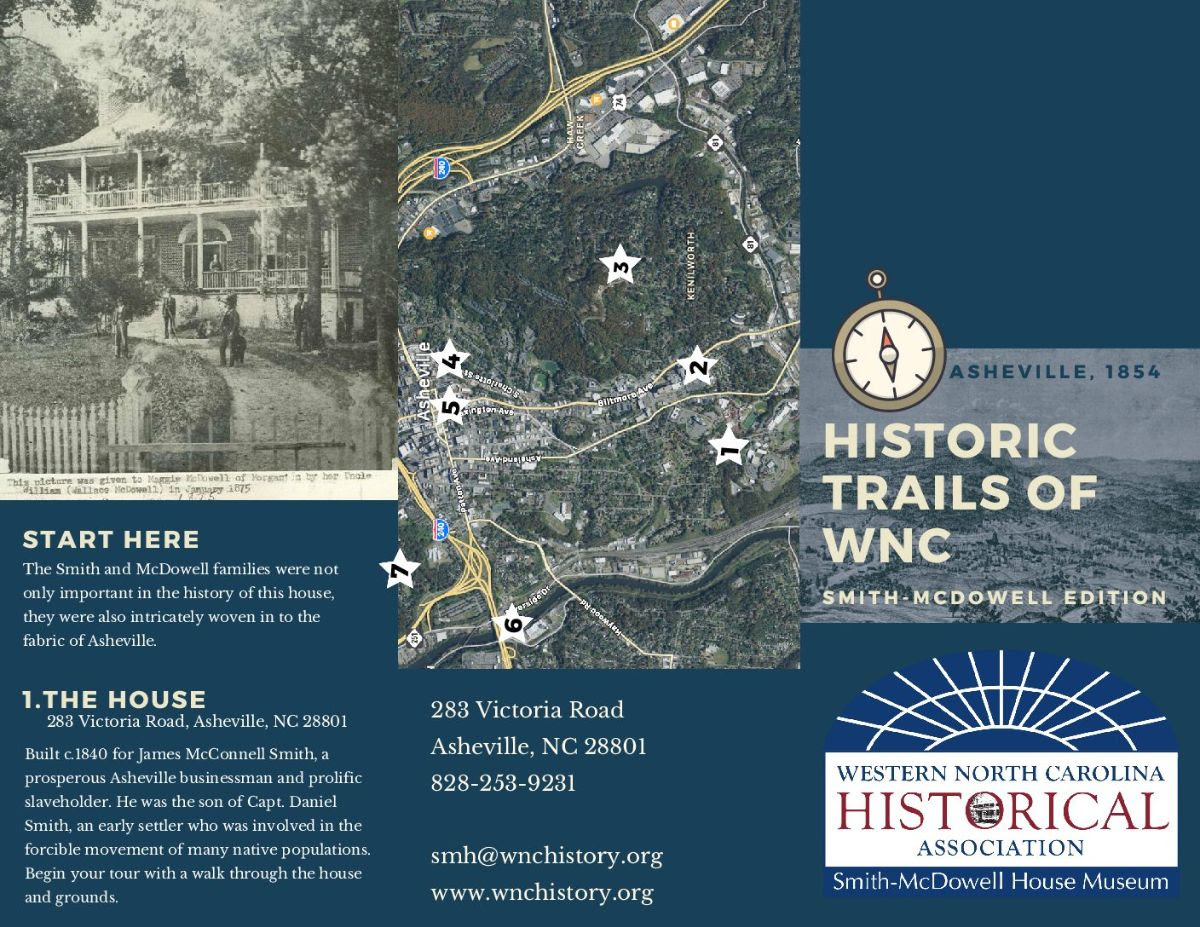 |
| The residents of the Smith-McDowell House and grounds were woven in to the fabric of Asheville.
This driving tour begins at the Smith-McDowell House Museum on the campus of A-B Tech and continues through historic sites related to early occupants of the house. |

Background and Goals of the Festivals & Cultural Events Program
The Festivals & Cultural Events Support Fund Grant Program was launched in 2016 by the Buncombe County Tourism Development Authority (BCTDA) and is designed to provide financial support for events that both serve the residents of Buncombe County and the visitors who travel to the Asheville area for the sense of authenticity and welcoming spirit that the destination exudes.
The primary purposes of this fund are to:
- Support and preserve cultural identity within Buncombe County;
- Stimulate the creation of new, or expansion of existing, festivals and cultural events; and
- Contribute to the financial viability and long-term sustainability of the area’s festivals and cultural events.
Explore Asheville CVB is offering grants for Festivals & Cultural Events ranging from $1,000 to $5,000, not to exceed 50% of the total event budget. Application deadline is Sept 29th at 5 pm.
Cottage Gardening

Cottage gardens are small, floriferous gardens popular for centuries. This program will describe the characteristics of cottage gardens. It draws on our experiences and learnings with designing, planting, and maintaining our own Cottage Garden at the Extension Office. You will receive some practical advice and tips on how to plan your own special cottage garden.
.jpg)
September is National Preparedness Month and this year’s theme is Prepare to Protect. In 2020, North Carolina experienced 247 flood events and 609 severe thunderstorms with damaging wind and hail. Weather events, the global pandemic, and even a 5.1 earthquake, are stark reminders that disasters can happen quickly. “Emergencies and disasters can happen at any time and we want individuals, families and our entire community to be Buncombe Ready,” says Buncombe County Public Health Preparedness Director, Fletcher Tove. “The recent flash flooding events serve as a reminder that families and individuals need to have a plan in place for unexpected disasters.”
Each week in September, the national campaign will be highlighting different aspects of preparedness planning to encourage residents and communities to consider their options in the event of an emergency.
COVID-19 Vaccination
The most important thing you can do to protect yourself and your family is to get the COVID-19 vaccine if you have not already been vaccinated. COVID-19 vaccines are safe, effective, and are our best chance to defeat the virus. The COVID-19 vaccine may not keep you from getting the virus, but it is highly effective at reducing severe illness, hospitalizations, and death in vaccinated individuals. Additionally, as more people get vaccinated, the virus loses the opportunity to evolve into new variants. Getting the vaccine is vital to the safety of our community and ensures that you and your family are taking the most important step in being prepared for this real, disaster-level virus.
Click here, to find a vaccine provider near you.
Week 1 September 1-4: Make A Plan
Active communication with your loved ones is crucial before, during, and after a disaster or emergency. Discuss a shelter plan, an evacuation route, a family communication plan and review the items in your emergency preparedness kit when composing a plan with your household. You should also establish a family meeting place that is familiar and easily accessible in case you are not together when disaster strikes.
Click here, for a guide to developing a household preparedness plan.
Week 2 September 5-11: Build A Kit
There is a chance that you and your family may have to stay put in a designated area for several hours or days in the event of an emergency or disaster. It is important to have a kit ready with food, water and other supplies that can last your entire household at least three to seven days. You need to compile all supplies in an easy to carry container before an emergency so that it is ready at a moment’s notice. Consider unique needs of family members and pets when putting together your kit and make sure that all of the members of your household are aware of its location.
Due to the coronavirus pandemic, make sure to include extra protective face masks, soap, hand sanitizer and disinfectant wipes in your kit.
Click here, for a comprehensive list of supplies to include in your emergency kit.
Week 3 September 12-18: Low-Cost, No-Cost Preparedness
Learn more about the risk of disasters in your area in order to limit their impacts on you and your family. Residents of Buncombe County can sign up to receive time-sensitive emergency alerts with the Buncombe Alerts emergency notification system. You can choose one or more options for receiving notifications, including landline, cellphone, text message, email, TTY, and the CodeRED mobile app.
Click here, to sign up for Buncombe Alerts.
Week 4 September 19-25: Teach Youth About Preparedness
Household members of all ages can and should get involved in making a preparedness plan and putting together an emergency kit. Getting kids involved in planning can ensure that they know what to do in the event of an emergency or disaster, especially if you are separated at first.
Click here, to find out more about how to involve youth in different aspects of preparedness planning.
The bottom line is that simple steps such as making a family disaster plan, creating an emergency supply kit, and signing up for your county’s emergency notification system are smart, cheap, and easy to do. Additionally, www.ReadyNC.org is a great resource for disaster preparedness in North Carolina. The site features resources and videos in multiple languages including American Sign Language. Prepare to Protect by taking these simple steps today!
|
||||||||||||||
|
Add your arts business and upcoming events to the Asheville Area Arts Council website by becoming an Arts Business Member! Benefits include:
|
||||||||||||||

|
|
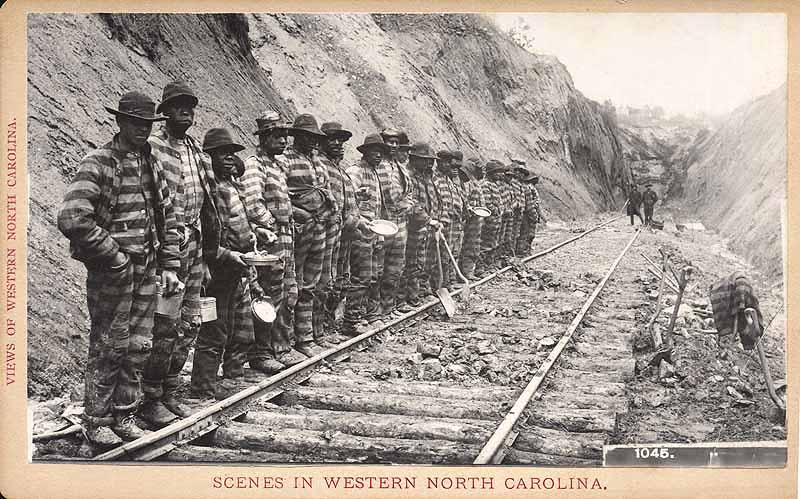
The construction of the Mountain Division of the Western North Carolina Railroad is widely considered one of the greatest human accomplishments in regards to both engineering and construction ever undertaken at the time it occurred. The project took place over a period of several years in the late 1800s. Many people are aware that the railroad provided the first dependable access to and from much of Western North Carolina for the rest of the state as well as much of the nation. Many also know the names of some of those who were instrumental in seeing through the completion of this ambitious project. Names such as Colonel Alexander Boyd Andrews, of Andrews’ Geyser fame. However, what most people are unaware of is that at least 95% of the labor which built the railroad across the Blue Ridge Escarpment was completed by inmates from the North Carolina State Penitentiary… and approximately 98% of those inmates were African American men… the majority of whom were unjustly imprisoned…
This project was created to share the true story behind this human endeavor and to honor the memory of those who labored and those who died here.
Western North Carolina has a rich assortment of county historical societies, archives, and museums. The Western North Carolina Historical Association seeks to help researchers, historians, genealogists, and the general public take full advantage of these resources.
Eligibility Checklist:
- Focus on K-12 youth services.
- Registered nonprofit organization, and/or 501(c)(3) with a valid EIN
- Located within a UScellular service area ZIP code:
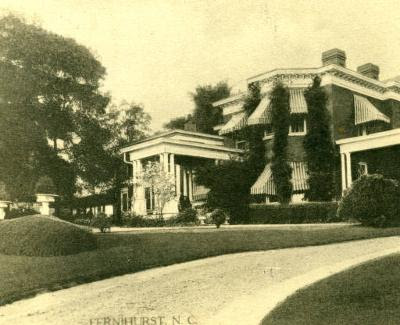 |
| Contained by its larger growing neighbor (Asheville), the French Broad and Swannanoa rivers, and the Southern Railway line, the Town of Victoria existed from 1887 until 1905, when it was absorbed into Asheville. The community—which included the Smith-McDowell House and Fernihurst mansion—originally incorporated into a town to prevent unwanted development (particularly from the Vanderbilts). |

For the first time in Greenville Chautauqua’s history you can view three of 2021 Reinventing America Festival performances and discussions.
You can catch them virtually through Oct 3. You have access to videos of the live shows and also the Virtual Conversations with the performers about their characters.
Please note, these virtual programs are only viewable through mid-night Sunday October 3 (to honor the intellectual property of the performers.)
So go ahead and schedule some “downtime” in the comfort of your home and step back into history with Ben Franklin, Thomas Edison, and Rosa Parks.

YMICC is committed to economic development and entrepreneurship for Black individuals and communities. Through this program entrepreneurs will receive six (6) months to one (1) year of business incubation support that will include business development training, startup and capacity building funding, as well as, mentorship opportunities. We are interested in you and your business ideas.
The “HMMM” (Hospitality, Medical, Manufacturing, Municipality) workforce training initiative and business development program is designed to support participants with training to build technical and workforce skills. The expansion of this program is “Operation Gateway” which provides a “circle of support” that addresses barriers to successful employment. In this program participants will receive wraparound services along their pathway to the workplace. This circle of services includes childcare, transportation, financial support, guidance, and re-entry skill development (e.g., resume-building and interviewing).

All throughout September, guests are invited to join the mountain’s naturalists as they count and celebrate the annual spectacle of the fall raptor migration. Participants can meet daily across the Mile High Swinging Bridge on Linville Peak, weather permitting.

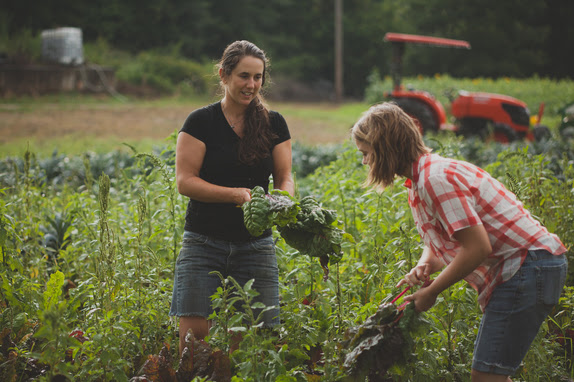
Visit The Learning Garden! The gardens are in full summer mode with ripening tomatoes, blooming roses, giant sunflowers, and many other perennials and plants of interest.
The Learning Garden is a dedicated, on-site teaching garden at the Buncombe Extension Center located at 49 Mt. Carmel Road, Asheville. It is managed and cared for by the Extension Master GardenerSM volunteers (EMGVs) of Buncombe County.
Everyone is welcome to visit the gardens Monday and Wednesday mornings from 9 to 12 when temperatures are cool and Master Gardeners are working in the gardens. Or come visit on your own Monday through Friday, 8 to 5.
The Learning Garden (TLG) surrounds the Extension building, includes 8 distinct gardens, and a composting demonstration site. Each garden offers plants that grow well in our region. You will gather new ideas and learn successful horticultural practices that lead to beautiful, healthy gardens.
Look for plant labels in the garden. Find more information and brochures at the kiosk near the building and in the garden mailboxes.
GARDENERS ARE IN THE GARDEN.

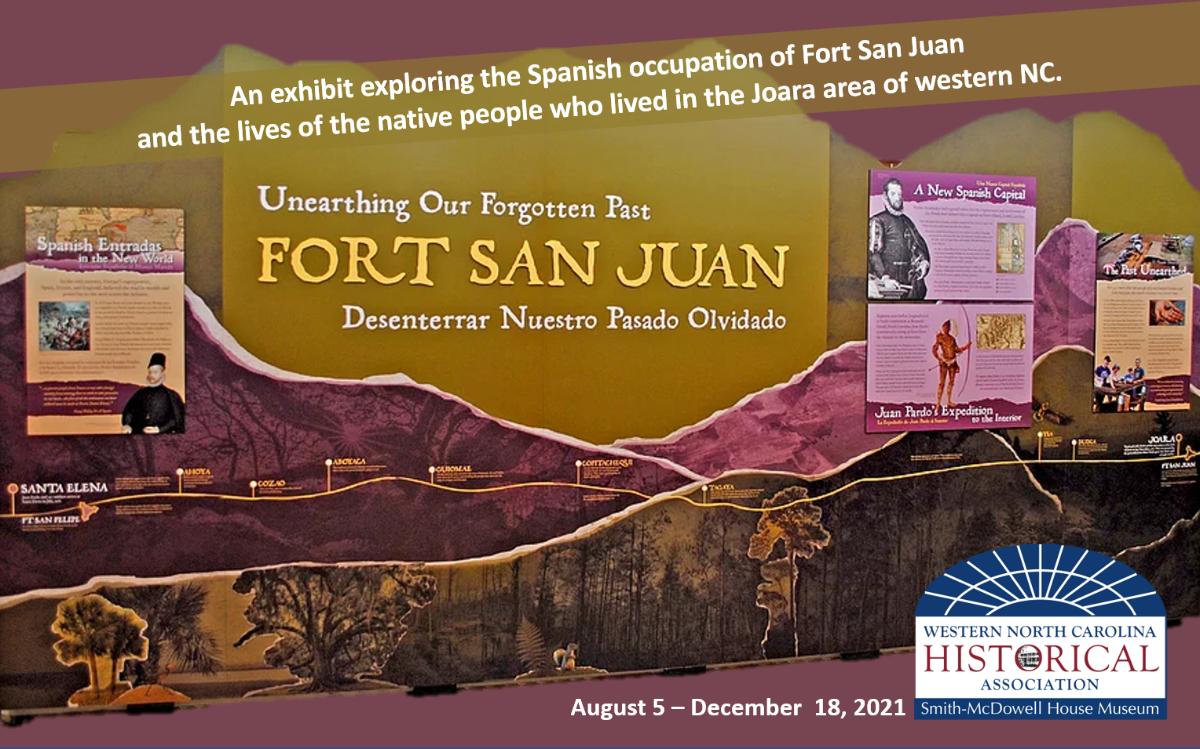
The exhibit was developed as part of the celebration of the 450th anniversary of the Juan Pardo expeditions. Several years ago, archaeologists identified a site near Morganton as the location of Joara, one of the largest Native American towns in what is today Western North Carolina.
Joara was occupied from approximately 1400-1600 A.D. Two Spanish expeditions led respectively by Hernando de Soto and Juan Pardo visited the town in the 1500s. The Pardo expedition was part of a larger effort to establish a string of forts from the coast of present-day South Carolina all the way to Mexico. In 2013, archaeologists confirmed that Joara was also the site of Fort San Juan, established by Pardo in 1567, nearly 20 years before the English settlement at Roanoke on the coast of North Carolina and 40 years before the settlement at Jamestown.
Through various artifacts uncovered by the archaeology, the exhibit showcases the Spanish occupation of Fort San Juan and the lives of the native people who lived in the Joara area.
The exhibit is on loan from the Exploring Joara Foundation Inc. Exploring Joara engages the public in archaeology in the Carolinas, and emphasizes the discovery of the Native American town of Joara and Fort San Juan. The exhibit will be on display at the Western North Carolina Historical Association’s gallery inside the Smith-McDowell House through December 15.
The gallery is open for visitation Thursday, Friday, and Saturday between 10:30am and 4:00pm. Reservations are recommended.
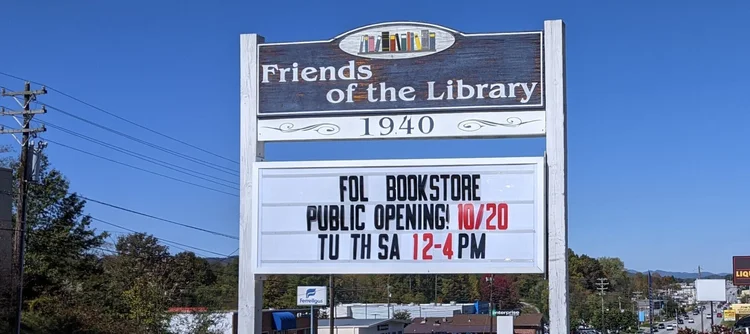
The Friends of the Henderson County Public Library knows how important books are to children and their parents. They are offering a special discount on children’s books at their bookstore in Hendersonville.
From Sept. 18 to Oct. 2, a box of children’s books is only $10. The Friends provides the boxes which are large enough to hold a lot of books.
For more than half a century, the Friends has been raising money to support the library system. They purchase books and equipment and sponsor programs.
The FOL bookstore is at 1940 Spartanburg Hwy (next to Dollar General) and is open Tuesday, Thursday, and Saturday from 12 noon to 4 p.m. Thousands of books, DVDs, and CDs are for sale, and knowledgeable volunteers are there to help. (The entrance is in the back).
Members of the Friends get a 10 percent discount on all purchases. (You can join the Friends at the bookstore). Anyone can donate books, CDs, and DVDs during the hours the store is open.
Everything is in excellent condition. Books are shelved by author or subject and are easy to find, and they are restocked throughout the week. The half-price table at the front of the store offers great bargains on books.

Hit the trails and learn more about the Arboretum’s botanically diverse forest with the return of guided trail walks in 2021! In response to COVID-19, new safety measures have been put in place to protect our guests, members, volunteers and staff: Walks will be limited to 10 people, including the guide, and all participants will be required to wear face coverings for the duration of the walk.
This free hiking program is led by trained volunteer guides who take small groups of participants along woodland trails and through a variety of forest types. Depending on the season, topics of discussion may include wildflowers, plant and tree identification, natural history and more.
Guided trail walks depart from the Baker Exhibit Center Lobby every Tuesday and Saturday at 1 p.m. through the month of October. Walks last 1.5- 2.5 hours and are approximately one to two miles in length, and as such are recommended for guests 14 years or older. Walks are held rain or shine, so all participants should dress appropriately for the weather.
Register In Advance
Space is limited and advance registration is encouraged. Pre-registered participants must check in at the Baker Information Desk no later than 10 minutes before the scheduled program to keep their spot. Unclaimed spots will be offered to other guests.
Guests may sign up for trail walks in the following ways:
- Pre-register online
- Sign up in-person at the Baker Information Desk.
Outdoor Skills Workshops
FREE
Call, 828-350-2062 for more information
and to register.
September 11 | 5-6pm
Location: Carrier Park
Backpacking Essentials: Learning to pack a
backpack and necessary gear.
September 18 | 5-6pm
Location: Montford
Introduction to Indoor Rock Climbing: Knot tying
and belaying.
September 25 | 5-6pm
Location: Carrier Park
Backcountry Camping Basics: Safety, tent set
up, cooking and water treatment techniques.
|
| The residents of the Smith-McDowell House and grounds were woven in to the fabric of Asheville.
This driving tour begins at the Smith-McDowell House Museum on the campus of A-B Tech and continues through historic sites related to early occupants of the house. |
The construction of the Mountain Division of the Western North Carolina Railroad is widely considered one of the greatest human accomplishments in regards to both engineering and construction ever undertaken at the time it occurred. The project took place over a period of several years in the late 1800s. Many people are aware that the railroad provided the first dependable access to and from much of Western North Carolina for the rest of the state as well as much of the nation. Many also know the names of some of those who were instrumental in seeing through the completion of this ambitious project. Names such as Colonel Alexander Boyd Andrews, of Andrews’ Geyser fame. However, what most people are unaware of is that at least 95% of the labor which built the railroad across the Blue Ridge Escarpment was completed by inmates from the North Carolina State Penitentiary… and approximately 98% of those inmates were African American men… the majority of whom were unjustly imprisoned…
This project was created to share the true story behind this human endeavor and to honor the memory of those who labored and those who died here.
Western North Carolina has a rich assortment of county historical societies, archives, and museums. The Western North Carolina Historical Association seeks to help researchers, historians, genealogists, and the general public take full advantage of these resources.
|
| Contained by its larger growing neighbor (Asheville), the French Broad and Swannanoa rivers, and the Southern Railway line, the Town of Victoria existed from 1887 until 1905, when it was absorbed into Asheville. The community—which included the Smith-McDowell House and Fernihurst mansion—originally incorporated into a town to prevent unwanted development (particularly from the Vanderbilts). |
All throughout September, guests are invited to join the mountain’s naturalists as they count and celebrate the annual spectacle of the fall raptor migration. Participants can meet daily across the Mile High Swinging Bridge on Linville Peak, weather permitting.
Visit The Learning Garden! The gardens are in full summer mode with ripening tomatoes, blooming roses, giant sunflowers, and many other perennials and plants of interest.
The Learning Garden is a dedicated, on-site teaching garden at the Buncombe Extension Center located at 49 Mt. Carmel Road, Asheville. It is managed and cared for by the Extension Master GardenerSM volunteers (EMGVs) of Buncombe County.
Everyone is welcome to visit the gardens Monday and Wednesday mornings from 9 to 12 when temperatures are cool and Master Gardeners are working in the gardens. Or come visit on your own Monday through Friday, 8 to 5.
The Learning Garden (TLG) surrounds the Extension building, includes 8 distinct gardens, and a composting demonstration site. Each garden offers plants that grow well in our region. You will gather new ideas and learn successful horticultural practices that lead to beautiful, healthy gardens.
Look for plant labels in the garden. Find more information and brochures at the kiosk near the building and in the garden mailboxes.
GARDENERS ARE IN THE GARDEN.
Jesse Daniel Edwards brings his particular brand of clever writing to the Grey Eagle’s patio: Sunday, September 26, 2021 at 5pm.