

Calendar of Events
Upcoming events and things to do in Asheville, NC. Below is a list of events for festivals, concerts, art exhibitions, group meetups and more.
Interested in adding an event to our calendar? Please click the green “Post Your Event” button below.
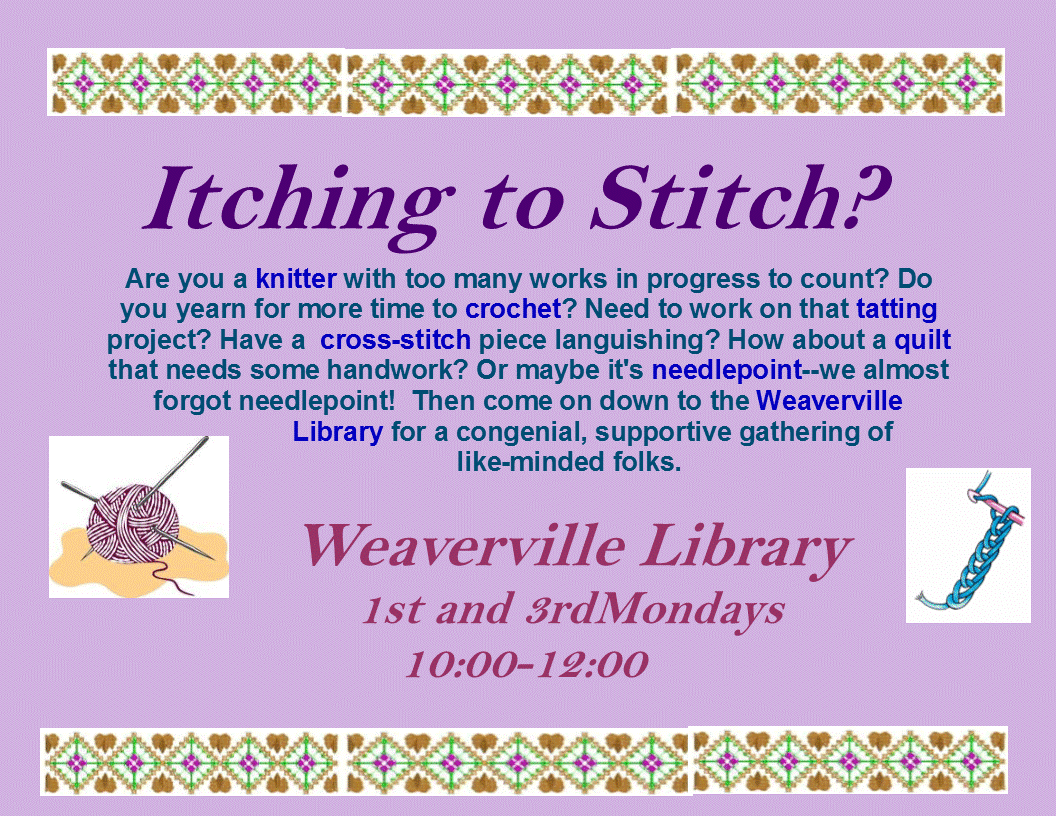
Bring your current needle project and work while socializing with other like-minded crafters
In this four-part class taught by M. Paige Taylor, explore composition and color using digital photography! Through a series of weekly assignments, hone your observation skills, apply framing and cropping with intention, and use color with purpose.APRIL 9, 16, 23, & 30—Thursdays, 6–8pm
Registration deadline: April 8$75 Museum Members, $85 non-members
THIS PROGRAM WILL TAKE PLACE VIRTUALLY VIA ZOOM. SPACE IS LIMITED; TO REGISTER, CLICK HERE OR CALL 828.253.3227 X122.
Matthew Pillsbury, Grande Galerie de l’Évolution, Paris, 2008, printed 2013, archival ink on paper, 39 ⅜ × 31 ½ inches, Collection of the Asheville Art Museum. Museum purchase with funds provided by the Nat C. Myers Photography Fund, 2012.44.99. © Matthew Pillsbury

In this short video, UNC-Asheville Lecturer in Art Rob Anderson talks color and takes an up-close look at Collection favorite Woman Arranging Flowers by Myron G. Barlow.

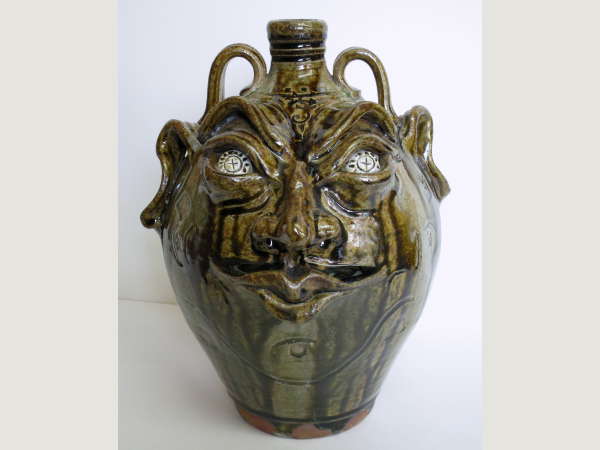

Every April, American Folk Art honors a wild pottery tradition that began regionally in the early 1800’s. No one knows for sure when the first face jug was created, but around the mountain region of North Carolina, face jugs began to be created for the storage of moonshine around 1810. The faces, snakes and other foreboding additions were added to the clay jugs to scare the children, so they would not drink the contents. In the unadorned world of the 1800’s, the face jug was remarkable and the tradition allowed for much creativity and fun amongst potters. Face jugs continue to be created in the same fashion as of old, which includes hand digging and mixing regional soils to make the clay, using regional materials to make the glazes, in many cases using broken plates for the teeth, and wood-firing the jugs to 2300 degrees. They are still in use, holding moonshine, but not necessarily scaring the kids.

On display daily January 18 – April 19, from 9 a.m. to 5 p.m. in the upstairs gallery of the Education Center, the Asheville Printmakers’ newest exhibit, Natural Impressions, will feature a variety of two- and three-dimensional print pieces utilizing numerous printmaking processes. Works will inspire visitors to think about the beauty and fragility of plants and the natural world through various perspectives and printmaking techniques. All pieces are available for purchase and a portion of the sales will benefit The North Carolina Arboretum Society.
Founded in 2013, the Asheville Printmakers is an energetic group of artists dedicated to expressing ideas and imagery through the medium of print. The group encompasses a wide range of processes and content, including traditional methods, such as lithography, woodcut and screen printing, and contemporary photographic printing processes, such as carbon printing, platinum-palladium and photopolymer etching.
Parking Fees
- Members: Free
- Personal Vehicles: $14
- Motorhomes / Vehicles (21’ or larger): $50
- Buses: $100
There are no other admission charges required for visitors to access the Arboretum’s grounds and facilities during the day beyond the standard parking fees listed above.
Welcome to Art in the Time of COVID– an online artwork exhibition by Pink Dog Creative artists. The work in this exhibition is either related to the COVID-19 pandemic, made during the time of Stay-At-Home orders, or is uplifting or otherwise helpful during this challenging time. Most of the work is for sale. Our artists are hard at work and appreciate your support during this difficult time. Check out our artist pages and please get in touch with artists directly for information on work, online classes, & commissions! Work will continue to be added during the quarantine, so please check back for updates.
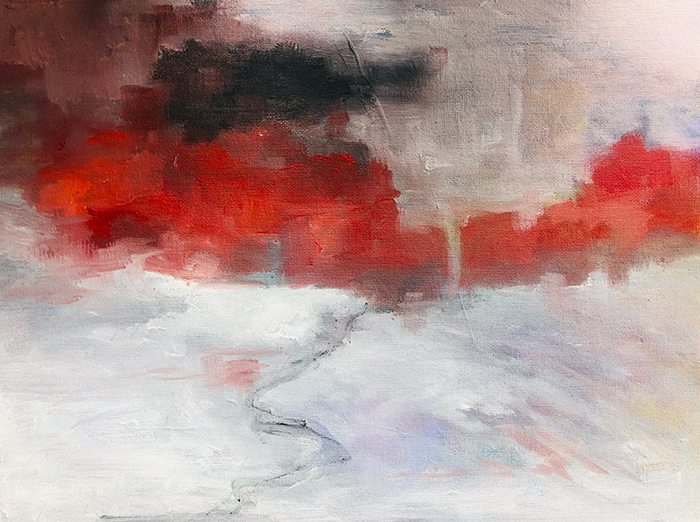
Karen Keil Brown, Where Will Our Path Take Us, Oil on canvas, 14 x 11″
In this four-part class taught by M. Paige Taylor, explore composition and color using digital photography! Through a series of weekly assignments, hone your observation skills, apply framing and cropping with intention, and use color with purpose.APRIL 9, 16, 23, & 30—Thursdays, 6–8pm
Registration deadline: April 8$75 Museum Members, $85 non-members
THIS PROGRAM WILL TAKE PLACE VIRTUALLY VIA ZOOM. SPACE IS LIMITED; TO REGISTER, CLICK HERE OR CALL 828.253.3227 X122.
Matthew Pillsbury, Grande Galerie de l’Évolution, Paris, 2008, printed 2013, archival ink on paper, 39 ⅜ × 31 ½ inches, Collection of the Asheville Art Museum. Museum purchase with funds provided by the Nat C. Myers Photography Fund, 2012.44.99. © Matthew Pillsbury
In this short video, UNC-Asheville Lecturer in Art Rob Anderson talks color and takes an up-close look at Collection favorite Woman Arranging Flowers by Myron G. Barlow.
Every April, American Folk Art honors a wild pottery tradition that began regionally in the early 1800’s. No one knows for sure when the first face jug was created, but around the mountain region of North Carolina, face jugs began to be created for the storage of moonshine around 1810. The faces, snakes and other foreboding additions were added to the clay jugs to scare the children, so they would not drink the contents. In the unadorned world of the 1800’s, the face jug was remarkable and the tradition allowed for much creativity and fun amongst potters. Face jugs continue to be created in the same fashion as of old, which includes hand digging and mixing regional soils to make the clay, using regional materials to make the glazes, in many cases using broken plates for the teeth, and wood-firing the jugs to 2300 degrees. They are still in use, holding moonshine, but not necessarily scaring the kids.
On display daily January 18 – April 19, from 9 a.m. to 5 p.m. in the upstairs gallery of the Education Center, the Asheville Printmakers’ newest exhibit, Natural Impressions, will feature a variety of two- and three-dimensional print pieces utilizing numerous printmaking processes. Works will inspire visitors to think about the beauty and fragility of plants and the natural world through various perspectives and printmaking techniques. All pieces are available for purchase and a portion of the sales will benefit The North Carolina Arboretum Society.
Founded in 2013, the Asheville Printmakers is an energetic group of artists dedicated to expressing ideas and imagery through the medium of print. The group encompasses a wide range of processes and content, including traditional methods, such as lithography, woodcut and screen printing, and contemporary photographic printing processes, such as carbon printing, platinum-palladium and photopolymer etching.
Parking Fees
- Members: Free
- Personal Vehicles: $14
- Motorhomes / Vehicles (21’ or larger): $50
- Buses: $100
There are no other admission charges required for visitors to access the Arboretum’s grounds and facilities during the day beyond the standard parking fees listed above.
Workout and wind down with us on Wednesdays this month for live yoga classes from Highland Brewing, hosted by our Packaging Manager & Yoga Instructor Extraordinaire, Abbey!
5:30-6:00 Wednesdays. Tune in on Instagram Live & Facebook Live. We hope you can all join us!
In this short video, UNC-Asheville Lecturer in Art Rob Anderson talks color and takes an up-close look at Collection favorite Woman Arranging Flowers by Myron G. Barlow.
Every April, American Folk Art honors a wild pottery tradition that began regionally in the early 1800’s. No one knows for sure when the first face jug was created, but around the mountain region of North Carolina, face jugs began to be created for the storage of moonshine around 1810. The faces, snakes and other foreboding additions were added to the clay jugs to scare the children, so they would not drink the contents. In the unadorned world of the 1800’s, the face jug was remarkable and the tradition allowed for much creativity and fun amongst potters. Face jugs continue to be created in the same fashion as of old, which includes hand digging and mixing regional soils to make the clay, using regional materials to make the glazes, in many cases using broken plates for the teeth, and wood-firing the jugs to 2300 degrees. They are still in use, holding moonshine, but not necessarily scaring the kids.
On display daily January 18 – April 19, from 9 a.m. to 5 p.m. in the upstairs gallery of the Education Center, the Asheville Printmakers’ newest exhibit, Natural Impressions, will feature a variety of two- and three-dimensional print pieces utilizing numerous printmaking processes. Works will inspire visitors to think about the beauty and fragility of plants and the natural world through various perspectives and printmaking techniques. All pieces are available for purchase and a portion of the sales will benefit The North Carolina Arboretum Society.
Founded in 2013, the Asheville Printmakers is an energetic group of artists dedicated to expressing ideas and imagery through the medium of print. The group encompasses a wide range of processes and content, including traditional methods, such as lithography, woodcut and screen printing, and contemporary photographic printing processes, such as carbon printing, platinum-palladium and photopolymer etching.
Parking Fees
- Members: Free
- Personal Vehicles: $14
- Motorhomes / Vehicles (21’ or larger): $50
- Buses: $100
There are no other admission charges required for visitors to access the Arboretum’s grounds and facilities during the day beyond the standard parking fees listed above.
Downtown Asheville is known for its eclectic arts and culture and a vibrant food and drink scene that celebrates independent restaurants and locally-sourced ingredients. Learn about this gorgeous city on a Taste Carolina walking tour and discover why Asheville was hailed by National Geographic’s Traveler Magazine as one of the top 15 places in the world to “treat your taste buds”!
Asheville Downtown Eats & Drinks Tour – Asheville’s Downtown Eats & Drinks Tour is a spirited and delicious way to explore the city! You’ll enjoy substantial bites and sips on this guided walking tour, sampling savory and sweet favorites, most paired with small drink pairings. This tour visits Asheville’s hidden gems, including eclectic restaurants and bars, and specialty food stores. You’ll also learn about the history of the city, the architecture, and the incredible culinary scene from your tour guide. By the end of this tour, you will feel like a local!
Private and custom tours can be arranged for any day or night of the week for groups.

Join us for an Easel Rider craft on Facebook Live with our Community Engagement Director, Marsha Almodovar. These fun crafts will utilize supplies you can easily find in your own home. Tune in each Thursday at 3pm EST as we go live to provide step by step instruction, and enjoy a moment of creativity and connection in your day!

|

|
Welcome to Art in the Time of COVID– an online artwork exhibition by Pink Dog Creative artists. The work in this exhibition is either related to the COVID-19 pandemic, made during the time of Stay-At-Home orders, or is uplifting or otherwise helpful during this challenging time. Most of the work is for sale. Our artists are hard at work and appreciate your support during this difficult time. Check out our artist pages and please get in touch with artists directly for information on work, online classes, & commissions! Work will continue to be added during the quarantine, so please check back for updates.
Karen Keil Brown, Where Will Our Path Take Us, Oil on canvas, 14 x 11″
Ever wanted to try your hand at the pottery wheel? Have you always wanted to learn to throw but you’re not sure if you want to commit to an 8-week class? Or maybe you and some friends are just looking for something different to do in Asheville on a Friday night. Well, look no further. Ready, Set, Throw is here!
Even if you’ve never touched clay before, our highly skilled staff will guide you through the entire process. It’s the perfect opportunity to get creative and have fun! All ages and skill levels are welcome.
Level: All Levels, Beginners Welcome
Tuition: $55 Per person, per night
VESSELS OF HOPE: A CALL FOR HELP FROM THE VILLAGE POTTERS CLAY CENTER
Sarah Wells Rolland is making 500 vessels in fundraiser for TVPCC.
Sustaining TVPCC through this season of closure has become my primary job. I have applied for multiple loans, EIDL, PPP, from my personal bank, and now we wait. I am filled with hope! I believe that what we began here in 2011 is just now becoming fully grown.
So, I asked myself, What can I do? Vessels of Hope came to me immediately and I knew I had to do it. I am personally embarking on a challenging labor of love, making 500 vessels, each unique just like you. I am asking you to become a vessel of hope with me and our wonderful community for The Village Potters Clay Center.”
Sarah will be at the wheel making these Vessels of Hope for the next 12 weeks, and glazing them using a broad palette. Every vessel will vary in shape, surface and color, each one unique. They will be fired regularly as there are enough for a kiln load, expecting at least 4 firings among the large gas kiln, the new Rolland kiln, and the Kazegama wood ash kiln at TVPCC to complete this project.
As this is written, Sarah has made 121 vessels, and 120 are already purchased. During this process, pictures and videos of Sarah making the vessels will be posted to social media and shared with benefactors, so we all feel connected and continue to nurture hope in this time. When the vessels are all completed, The Village Potters team and volunteers will gather and pack them, but there will be no specific allocation of pots to people. Locals will be welcome to come by and pick up their vessel, and whether for shipping or pick up, pots will be distributed from the packed boxes, so nobody will know which pot they receive until the box is opened .
Sarah’s goal is for 500 benefactors, people who believe in the mission at The Village Potters Clay Center, and who are in a position to help. A minimum donation of $100 is asked for each Vessel of Hope, which includes shipping. For those who are able and would like to purchase more than one as gifts, individual pick up or shipping may be arranged. *10% of the proceeds generated through this project will be donated to artists in the River Arts District who are also struggling to stay open.
More from Sarah Wells Rolland: “These “Vessels of Hope” are a joyous creative pursuit for me personally, and you can be a part. I thank you for your love and support!”
The Village Potters Clay Center Team: Sarah Wells Rolland, George Rolland, Lori Theriault, Judi Harwood, Julia Mann, Christine Henry, Tori Motyl, and Lindsey Mudge,
In this short video, UNC-Asheville Lecturer in Art Rob Anderson talks color and takes an up-close look at Collection favorite Woman Arranging Flowers by Myron G. Barlow.
Every April, American Folk Art honors a wild pottery tradition that began regionally in the early 1800’s. No one knows for sure when the first face jug was created, but around the mountain region of North Carolina, face jugs began to be created for the storage of moonshine around 1810. The faces, snakes and other foreboding additions were added to the clay jugs to scare the children, so they would not drink the contents. In the unadorned world of the 1800’s, the face jug was remarkable and the tradition allowed for much creativity and fun amongst potters. Face jugs continue to be created in the same fashion as of old, which includes hand digging and mixing regional soils to make the clay, using regional materials to make the glazes, in many cases using broken plates for the teeth, and wood-firing the jugs to 2300 degrees. They are still in use, holding moonshine, but not necessarily scaring the kids.
More than 700 students from across the country used canvases for an artistic expression inspired by Carl Sandburg’s poem “Night Movement,” and other poetry pieces in Sandburg’s collection “Smoke and Steel.” 71 canvases were submitted to the exhibit and each canvas reflects how the young artists chose to interpret what “movement” means to them. Visitors can see the installation in a building adjacent to the Sandburg Home when they visit. Young artists are represented from across the country and locally.
Sandburg Home: The Sandburg Home is a great place to start your visit! The ground floor of the home contains visitor information, exhibits, tour ticket sales, the park store, and you can watch the park video. The main and top level of the home are furnished with the Sandburg family belongings. Visitors may only access the furnished ares of the home on a guided tour.
Sandburg Home Guided Tour Fee: (credit card only)
$8.00 for Adults 16 and older
$5.00 for Adults age 62 and older and all interagency pass holders
Free for Children age 15 and under
- Reservations: Reserving in advance lets you pick your preferred house tour time. Tours fill up quickly. Last-minute, in-person tickets may not be available on the day you visit. Plan ahead and reserve house tour tickets at recreation.gov.
- Passes: The park sells the America the Beautiful– National Parks and Federal Recreational Lands Passes.
*These passes do not waive the house tour fee, but do provide a discount. - 30-minute house tours are offered every day. Visit recreation.gov for the current schedule.
- Visitors may only tour the Sandburg Home on a guided tour.
- Tours are limited to 12 persons.
- Strollers are not permitted on the house tour, but there is a place to leave them for storage. Infants and small children should be carried through the house while on tour.
On display daily January 18 – April 19, from 9 a.m. to 5 p.m. in the upstairs gallery of the Education Center, the Asheville Printmakers’ newest exhibit, Natural Impressions, will feature a variety of two- and three-dimensional print pieces utilizing numerous printmaking processes. Works will inspire visitors to think about the beauty and fragility of plants and the natural world through various perspectives and printmaking techniques. All pieces are available for purchase and a portion of the sales will benefit The North Carolina Arboretum Society.
Founded in 2013, the Asheville Printmakers is an energetic group of artists dedicated to expressing ideas and imagery through the medium of print. The group encompasses a wide range of processes and content, including traditional methods, such as lithography, woodcut and screen printing, and contemporary photographic printing processes, such as carbon printing, platinum-palladium and photopolymer etching.
Parking Fees
- Members: Free
- Personal Vehicles: $14
- Motorhomes / Vehicles (21’ or larger): $50
- Buses: $100
There are no other admission charges required for visitors to access the Arboretum’s grounds and facilities during the day beyond the standard parking fees listed above.
SLOW ART FRIDAYS
Each Friday at 12pm while the Museum is closed, docents lead virtual, in-depth conversations about a few artworks in our Collection or special exhibitions. The goal is simple: slow down, discover the joy of looking at art, and talk about the experience with others. Topics, artworks, and self-guided questions are posted on the Museum’s website in advance for participants, or for those wishing to have a self-guided experience on their own. Space is limited; to register, email Kristi McMillan, director of learning & engagement, or call 828.253.3227 x122.
FILLS Quickly —register early in week.
Downtown Asheville is known for its eclectic arts and culture and a vibrant food and drink scene that celebrates independent restaurants and locally-sourced ingredients. Learn about this gorgeous city on a Taste Carolina walking tour and discover why Asheville was hailed by National Geographic’s Traveler Magazine as one of the top 15 places in the world to “treat your taste buds”!
Asheville Downtown Eats & Drinks Tour – Asheville’s Downtown Eats & Drinks Tour is a spirited and delicious way to explore the city! You’ll enjoy substantial bites and sips on this guided walking tour, sampling savory and sweet favorites, most paired with small drink pairings. This tour visits Asheville’s hidden gems, including eclectic restaurants and bars, and specialty food stores. You’ll also learn about the history of the city, the architecture, and the incredible culinary scene from your tour guide. By the end of this tour, you will feel like a local!
Private and custom tours can be arranged for any day or night of the week for groups.

A fancy formal live comedy show on the internet featuring 10 very well dressed comedians!
Live streaming on Instagram on @ModelfaceComedy
The show is free but tips are appreciated and will be divided among all the comics on the show.
Paypal [email protected]
Venmo @modelface-comedy
Welcome to Art in the Time of COVID– an online artwork exhibition by Pink Dog Creative artists. The work in this exhibition is either related to the COVID-19 pandemic, made during the time of Stay-At-Home orders, or is uplifting or otherwise helpful during this challenging time. Most of the work is for sale. Our artists are hard at work and appreciate your support during this difficult time. Check out our artist pages and please get in touch with artists directly for information on work, online classes, & commissions! Work will continue to be added during the quarantine, so please check back for updates.
Karen Keil Brown, Where Will Our Path Take Us, Oil on canvas, 14 x 11″
VESSELS OF HOPE: A CALL FOR HELP FROM THE VILLAGE POTTERS CLAY CENTER
Sarah Wells Rolland is making 500 vessels in fundraiser for TVPCC.
Sustaining TVPCC through this season of closure has become my primary job. I have applied for multiple loans, EIDL, PPP, from my personal bank, and now we wait. I am filled with hope! I believe that what we began here in 2011 is just now becoming fully grown.
So, I asked myself, What can I do? Vessels of Hope came to me immediately and I knew I had to do it. I am personally embarking on a challenging labor of love, making 500 vessels, each unique just like you. I am asking you to become a vessel of hope with me and our wonderful community for The Village Potters Clay Center.”
Sarah will be at the wheel making these Vessels of Hope for the next 12 weeks, and glazing them using a broad palette. Every vessel will vary in shape, surface and color, each one unique. They will be fired regularly as there are enough for a kiln load, expecting at least 4 firings among the large gas kiln, the new Rolland kiln, and the Kazegama wood ash kiln at TVPCC to complete this project.
As this is written, Sarah has made 121 vessels, and 120 are already purchased. During this process, pictures and videos of Sarah making the vessels will be posted to social media and shared with benefactors, so we all feel connected and continue to nurture hope in this time. When the vessels are all completed, The Village Potters team and volunteers will gather and pack them, but there will be no specific allocation of pots to people. Locals will be welcome to come by and pick up their vessel, and whether for shipping or pick up, pots will be distributed from the packed boxes, so nobody will know which pot they receive until the box is opened .
Sarah’s goal is for 500 benefactors, people who believe in the mission at The Village Potters Clay Center, and who are in a position to help. A minimum donation of $100 is asked for each Vessel of Hope, which includes shipping. For those who are able and would like to purchase more than one as gifts, individual pick up or shipping may be arranged. *10% of the proceeds generated through this project will be donated to artists in the River Arts District who are also struggling to stay open.
More from Sarah Wells Rolland: “These “Vessels of Hope” are a joyous creative pursuit for me personally, and you can be a part. I thank you for your love and support!”
The Village Potters Clay Center Team: Sarah Wells Rolland, George Rolland, Lori Theriault, Judi Harwood, Julia Mann, Christine Henry, Tori Motyl, and Lindsey Mudge,
In this short video, UNC-Asheville Lecturer in Art Rob Anderson talks color and takes an up-close look at Collection favorite Woman Arranging Flowers by Myron G. Barlow.