

Calendar of Events
Upcoming events and things to do in Asheville, NC. Below is a list of events for festivals, concerts, art exhibitions, group meetups and more.
Interested in adding an event to our calendar? Please click the green “Post Your Event” button below.
Pieces made from nylon fabric ripstop, which keeps tears from spreading, invite viewers into created, fantastical worlds, only to highlight the complex—even impossible—architectures of their construction. Before the pandemic, Adrian primarily focused on personal experiences and interrogations of queerness, identity, and sexuality. Since then, the work has zoomed out in its scope, still centering identity but placed in larger infrastructure and surveillance systems that mediate, manipulate, and control desire.
Adrian counts queer fiber art, BDSM and kink culture, theatre, camp horror, puppetry, and drag among his many influences. Works in RIPSTOP, like the modernist bounce house sculpture A Fallible Complex (2021), evoke spaces for play, beckoning visitors in through their alluring aesthetic and then blocking their entrance or revealing structural instabilities, like missing floors. Others, like The Sensational Inflatable Furry Divines (2017-19), use sensual materials, like faux fur, spandex, and pleather, which connect to theatrical performance and counterculture. The materials “play on people’s initial associations and serve as a gateway into greater conversations about identity construction, performance, desire, and technology,” he shares.Pieces also nod to the history of quilting, including the AIDS Memorial Quilt, another influence on Adrian’s work. “Even when pieces aren’t explicitly making quilt references, I want the history of quilting and sewing-based craft to be part of the conversation of the work,” he says. “Craft is so much about the processes and histories behind materials. It’s about connecting with communities of people who practice those techniques. It’s about material and technique being a doorway into a greater relationship with an object.”
Themes of transformation—of structures, identities, and bodies—run throughout the show. “What I love about drag and puppetry is the sense of transformation and play, specifically with bodies,” Adrian says. “Within these art forms, a body can become mutable and capable of performing and becoming in unexpected states.” The sculptures also transform throughout viewers’ experiences, going through stages of inflation and deflation and existing in many different states.
RIPSTOP’s constant interplay between surface and depth, assumption and reality, are all a part of what Adrian describes as “looking behind the curtain,” which they trace back to the theatre. “When I’m thinking about systems, and the systems desire fits into, I’m thinking of stage construction, the backstage, the things that go on behind the show, and performance of our desires,” they explain.
As a craft artist, Adrian’s philosophy “comes down to having an intentional relationship with material, process, and technique,” he says. “Those aspects of art making are just as – if not more – important than an intellectualized concept being illustrated by an artwork.”
“Broadened definitions of craft that highlight communities of practice are foundational for the Center for Craft’s new strategic direction,” explains Executive Director Stephanie Moore. “Max Adrian’s work in RIPSTOP exemplifies the expansive and meaningful forms craft can take.” The Center for Craft is an institution Adrian credits for their professional growth. “The Center for Craft has felt like such a supporting institution for me specifically and for so many other craft artists I know,” they note. “To be able to bring this amount of work to Asheville is pretty cool.”
See Max Adrian: RIPSTOP at the Center for Craft Beginning July 26. A reception will be held on August 15. RIPSTOP is organized by Houston Center for Contemporary Craft and curated by Sarah Darro.
American Made: Paintings and Sculpture from the DeMell Jacobsen Collection features more than 100 works of art by renowned American artists. The exhibition beautifully illustrates distinctive styles and thought-provoking art explored by American artists over the past two centuries. Though many objects from the DeMell Jacobsen Collection have been on view at other museums, ranging from the Metropolitan Museum of Art and the Smithsonian American Art Museum to the Amon Carter Museum of American Art and Saint Louis Art Museum, this exhibition features the best of the collection brought together in one location. The exhibition begins with Colonial-era portraits by masters, such as Benjamin West, Thomas Sully, and Sarah Miriam Peale, and then moves on to highlight the development of mid-19th-century landscape painting. Viewers will discover works depicting the United States from coast to coast by artists, including Thomas Cole, Asher B. Durand, Jasper Francis Copsey, and even a monumental arctic scene by William Bradford.
Bill Viola’s Moving Stillness: Mount Rainier, 1979 on loan from Art Bridges is an immersive experience that explores the ideas of death and regeneration in nature. In a darkened room, sounds from nature envelop the viewer, as a placid pool of water reflects a projected image of Mount Rainier onto a screen. The water is periodically disturbed, causing the image to dissolve and slowly recompose as the pool settles. As an active volcano at rest, Mount Rainier embodies both quiet beauty and dramatic violence. Using time as both a tool and a theme in his work, Viola visualizes the dualities of nature’s rhythms of renewal, which include moments of both fragility and strength.
Ceramic artists throughout history have become masters of all four elements—creating clay from a mixture of earth and water to shape their work, drying it in air, and hardening it in fire. Throughout this process, the artist decides which aspects of the work will be tightly controlled, and when the elements can step in to leave nature’s mark. This exhibition traces the historical, stylistic, and conceptual origins of work that either embraces or refuses the element of chance in ceramics, looking at modern and contemporary work made in Western North Carolina.
The Asheville Art Museum is pleased to present Ginny Ruffner’s Reforestation of the Imagination, organized and toured by the Smithsonian American Art Museum. The exhibition imagines an apocalyptic landscape of withered plant forms that come to life when activated with augmented reality. In collaboration with animator and media artist Grant Kirkpatrick, Ruffner illuminates the delicate balance between nature and the artificial human-built world around us, putting forth an optimistic hope for the future: that technology can be a means to understand and help save the earth from environmental devastation. Visitors can download the free app “Reforestation” on their phones or use the iPads in the gallery to bring this second reality to life. When the tree rings of a stump are viewed through a device’s camera lens, a hologram of a fictional plant appears to sprout from the sculpture. These imagined fruits and flowers have evolved from existing flora, developing dramatic appendages and skills necessary to flourish in this radically different environment. In Ruffner’s fantastical reality, tulips develop stem flexibility, pears contain windows to the outside world, and flowers take on the form of birds. The installation includes Ruffner’s tongue-in-cheek descriptions of her surreal flora and their remarkable, sometimes humorous adaptations. Used as inspiration for the AR images, 19 original drawings by the artist will also be on view.
From FROZEN to PHANTOM to WICKED, this all-new fall-down funny, satirical roast of over 30 Broadway hits features outrageous costumes, silly spoofs of the songs you know by heart and madcap impressions by a stellar cast! Newer spoofs include HAMILTON, DEAR EVAN HANSEN and MOULIN ROUGE. It’s never been more fun poking fun at your favorite musicals and stars! A New York sensation for 35 years, a talented quintet of comic chameleons throw out pointed parodies at a dizzying pace. Whether you are a seasoned theatre-goer or new to it all, the Tony Award® winning Forbidden Broadway is your one-stop ticket to non-stop laughs: a hip and fresh view of theatre’s tried and true that will leave you begging for more! The New York Times has made Forbidden Broadway: The Next Generation a “Critics Pick” calling it “The Best Edition of Forbidden Broadway in recent memory!”
American Made: Paintings and Sculpture from the DeMell Jacobsen Collection features more than 100 works of art by renowned American artists. The exhibition beautifully illustrates distinctive styles and thought-provoking art explored by American artists over the past two centuries. Though many objects from the DeMell Jacobsen Collection have been on view at other museums, ranging from the Metropolitan Museum of Art and the Smithsonian American Art Museum to the Amon Carter Museum of American Art and Saint Louis Art Museum, this exhibition features the best of the collection brought together in one location. The exhibition begins with Colonial-era portraits by masters, such as Benjamin West, Thomas Sully, and Sarah Miriam Peale, and then moves on to highlight the development of mid-19th-century landscape painting. Viewers will discover works depicting the United States from coast to coast by artists, including Thomas Cole, Asher B. Durand, Jasper Francis Copsey, and even a monumental arctic scene by William Bradford.
Bill Viola’s Moving Stillness: Mount Rainier, 1979 on loan from Art Bridges is an immersive experience that explores the ideas of death and regeneration in nature. In a darkened room, sounds from nature envelop the viewer, as a placid pool of water reflects a projected image of Mount Rainier onto a screen. The water is periodically disturbed, causing the image to dissolve and slowly recompose as the pool settles. As an active volcano at rest, Mount Rainier embodies both quiet beauty and dramatic violence. Using time as both a tool and a theme in his work, Viola visualizes the dualities of nature’s rhythms of renewal, which include moments of both fragility and strength.
Ceramic artists throughout history have become masters of all four elements—creating clay from a mixture of earth and water to shape their work, drying it in air, and hardening it in fire. Throughout this process, the artist decides which aspects of the work will be tightly controlled, and when the elements can step in to leave nature’s mark. This exhibition traces the historical, stylistic, and conceptual origins of work that either embraces or refuses the element of chance in ceramics, looking at modern and contemporary work made in Western North Carolina.
The Asheville Art Museum is pleased to present Ginny Ruffner’s Reforestation of the Imagination, organized and toured by the Smithsonian American Art Museum. The exhibition imagines an apocalyptic landscape of withered plant forms that come to life when activated with augmented reality. In collaboration with animator and media artist Grant Kirkpatrick, Ruffner illuminates the delicate balance between nature and the artificial human-built world around us, putting forth an optimistic hope for the future: that technology can be a means to understand and help save the earth from environmental devastation. Visitors can download the free app “Reforestation” on their phones or use the iPads in the gallery to bring this second reality to life. When the tree rings of a stump are viewed through a device’s camera lens, a hologram of a fictional plant appears to sprout from the sculpture. These imagined fruits and flowers have evolved from existing flora, developing dramatic appendages and skills necessary to flourish in this radically different environment. In Ruffner’s fantastical reality, tulips develop stem flexibility, pears contain windows to the outside world, and flowers take on the form of birds. The installation includes Ruffner’s tongue-in-cheek descriptions of her surreal flora and their remarkable, sometimes humorous adaptations. Used as inspiration for the AR images, 19 original drawings by the artist will also be on view.
Start your New Year off with self love by immersing in the healing vibrations of a Sound Bath!
Join your host Kristin Hillegas, for a one-hour Serenity Sound Bath and experience a deeply immersive, full-body sound and vibrational experience. A sound bath can cleanse your soul, restore your balance, surround you with peace and tranquility and stimulate healing.
Note: Please bring a yoga mat/pillow/blanket since you will be lying on the floor. Wear warm, comfortable, and flexible clothing.
The Sound Bath will take place upstairs in the Education Building. Choose your space starting at 1:00 PM, doors close promptly at 1:15 PM.
This service is being offered on a Love Offering basis.(Suggested Value $25) Donations allow us to continue to provide these immersive experiences.
Accessible parking is available in the Center for Spiritual Living Asheville upper parking lot. The entrance to the upper parking lot is off of S. Bear Creek Rd between Science of Mind Way and Sand Hill Rd.
There is a boardwalk walk-way from the upper parking lot to the building entrance.
Jack’s long-running Traditional Irish Music Session is the perfect way to enjoy the Celtic-influenced sounds of talented pluckers from all over WNC & further afield! Stop in to enjoy a pint or afternoon Irish coffee with the music! Sláinte!
From FROZEN to PHANTOM to WICKED, this all-new fall-down funny, satirical roast of over 30 Broadway hits features outrageous costumes, silly spoofs of the songs you know by heart and madcap impressions by a stellar cast! Newer spoofs include HAMILTON, DEAR EVAN HANSEN and MOULIN ROUGE. It’s never been more fun poking fun at your favorite musicals and stars! A New York sensation for 35 years, a talented quintet of comic chameleons throw out pointed parodies at a dizzying pace. Whether you are a seasoned theatre-goer or new to it all, the Tony Award® winning Forbidden Broadway is your one-stop ticket to non-stop laughs: a hip and fresh view of theatre’s tried and true that will leave you begging for more! The New York Times has made Forbidden Broadway: The Next Generation a “Critics Pick” calling it “The Best Edition of Forbidden Broadway in recent memory!”
The Grey Eagle and Worthwhile Sounds Present Nora Brown with Wyndham Baird. All Ages.
Pieces made from nylon fabric ripstop, which keeps tears from spreading, invite viewers into created, fantastical worlds, only to highlight the complex—even impossible—architectures of their construction. Before the pandemic, Adrian primarily focused on personal experiences and interrogations of queerness, identity, and sexuality. Since then, the work has zoomed out in its scope, still centering identity but placed in larger infrastructure and surveillance systems that mediate, manipulate, and control desire.
Adrian counts queer fiber art, BDSM and kink culture, theatre, camp horror, puppetry, and drag among his many influences. Works in RIPSTOP, like the modernist bounce house sculpture A Fallible Complex (2021), evoke spaces for play, beckoning visitors in through their alluring aesthetic and then blocking their entrance or revealing structural instabilities, like missing floors. Others, like The Sensational Inflatable Furry Divines (2017-19), use sensual materials, like faux fur, spandex, and pleather, which connect to theatrical performance and counterculture. The materials “play on people’s initial associations and serve as a gateway into greater conversations about identity construction, performance, desire, and technology,” he shares.Pieces also nod to the history of quilting, including the AIDS Memorial Quilt, another influence on Adrian’s work. “Even when pieces aren’t explicitly making quilt references, I want the history of quilting and sewing-based craft to be part of the conversation of the work,” he says. “Craft is so much about the processes and histories behind materials. It’s about connecting with communities of people who practice those techniques. It’s about material and technique being a doorway into a greater relationship with an object.”
Themes of transformation—of structures, identities, and bodies—run throughout the show. “What I love about drag and puppetry is the sense of transformation and play, specifically with bodies,” Adrian says. “Within these art forms, a body can become mutable and capable of performing and becoming in unexpected states.” The sculptures also transform throughout viewers’ experiences, going through stages of inflation and deflation and existing in many different states.
RIPSTOP’s constant interplay between surface and depth, assumption and reality, are all a part of what Adrian describes as “looking behind the curtain,” which they trace back to the theatre. “When I’m thinking about systems, and the systems desire fits into, I’m thinking of stage construction, the backstage, the things that go on behind the show, and performance of our desires,” they explain.
As a craft artist, Adrian’s philosophy “comes down to having an intentional relationship with material, process, and technique,” he says. “Those aspects of art making are just as – if not more – important than an intellectualized concept being illustrated by an artwork.”
“Broadened definitions of craft that highlight communities of practice are foundational for the Center for Craft’s new strategic direction,” explains Executive Director Stephanie Moore. “Max Adrian’s work in RIPSTOP exemplifies the expansive and meaningful forms craft can take.” The Center for Craft is an institution Adrian credits for their professional growth. “The Center for Craft has felt like such a supporting institution for me specifically and for so many other craft artists I know,” they note. “To be able to bring this amount of work to Asheville is pretty cool.”
See Max Adrian: RIPSTOP at the Center for Craft Beginning July 26. A reception will be held on August 15. RIPSTOP is organized by Houston Center for Contemporary Craft and curated by Sarah Darro.
Every Monday, Ivy Rozen, Senior Editor of The Black Mountain Press, will host a poetry-specific open mic from 6:30pm-9pm. Each poet will be able to share 2-3 poems, and occasionally we will have local celebrity poets close out our night with a featured reading (email Ivy at [email protected] if you’d like to be a featured poet)!

DSSOLVR PRESENTS:
ROBERT’S TOTALLY RAD TRIVIA
Every Monday, at 7:00 PM, come on down
Hosted by the witty & sagacious Jason Mencer, our epic pub trivia night runs every Monday from 7:30-9:30pm! Plus $5.00 well drinks all night!
Come test your brain power with tasty pub fare, an adult beverage or two — and a team of your smartest friends! Win prizes each round and crow a little about what a smarty-pants you are!
Pieces made from nylon fabric ripstop, which keeps tears from spreading, invite viewers into created, fantastical worlds, only to highlight the complex—even impossible—architectures of their construction. Before the pandemic, Adrian primarily focused on personal experiences and interrogations of queerness, identity, and sexuality. Since then, the work has zoomed out in its scope, still centering identity but placed in larger infrastructure and surveillance systems that mediate, manipulate, and control desire.
Adrian counts queer fiber art, BDSM and kink culture, theatre, camp horror, puppetry, and drag among his many influences. Works in RIPSTOP, like the modernist bounce house sculpture A Fallible Complex (2021), evoke spaces for play, beckoning visitors in through their alluring aesthetic and then blocking their entrance or revealing structural instabilities, like missing floors. Others, like The Sensational Inflatable Furry Divines (2017-19), use sensual materials, like faux fur, spandex, and pleather, which connect to theatrical performance and counterculture. The materials “play on people’s initial associations and serve as a gateway into greater conversations about identity construction, performance, desire, and technology,” he shares.Pieces also nod to the history of quilting, including the AIDS Memorial Quilt, another influence on Adrian’s work. “Even when pieces aren’t explicitly making quilt references, I want the history of quilting and sewing-based craft to be part of the conversation of the work,” he says. “Craft is so much about the processes and histories behind materials. It’s about connecting with communities of people who practice those techniques. It’s about material and technique being a doorway into a greater relationship with an object.”
Themes of transformation—of structures, identities, and bodies—run throughout the show. “What I love about drag and puppetry is the sense of transformation and play, specifically with bodies,” Adrian says. “Within these art forms, a body can become mutable and capable of performing and becoming in unexpected states.” The sculptures also transform throughout viewers’ experiences, going through stages of inflation and deflation and existing in many different states.
RIPSTOP’s constant interplay between surface and depth, assumption and reality, are all a part of what Adrian describes as “looking behind the curtain,” which they trace back to the theatre. “When I’m thinking about systems, and the systems desire fits into, I’m thinking of stage construction, the backstage, the things that go on behind the show, and performance of our desires,” they explain.
As a craft artist, Adrian’s philosophy “comes down to having an intentional relationship with material, process, and technique,” he says. “Those aspects of art making are just as – if not more – important than an intellectualized concept being illustrated by an artwork.”
“Broadened definitions of craft that highlight communities of practice are foundational for the Center for Craft’s new strategic direction,” explains Executive Director Stephanie Moore. “Max Adrian’s work in RIPSTOP exemplifies the expansive and meaningful forms craft can take.” The Center for Craft is an institution Adrian credits for their professional growth. “The Center for Craft has felt like such a supporting institution for me specifically and for so many other craft artists I know,” they note. “To be able to bring this amount of work to Asheville is pretty cool.”
See Max Adrian: RIPSTOP at the Center for Craft Beginning July 26. A reception will be held on August 15. RIPSTOP is organized by Houston Center for Contemporary Craft and curated by Sarah Darro.
Incredible Business Networking: IBN Biz Lunch – East Asheville
1st Tuesday monthly. 11:30am – 1pm, Suwana Asian Cuisine (https://www.suwanaasiancuisine.com), 45 Tunnel Rd., Asheville 28805
Meeting Leader:
Steve Jencks, Incredible Towns of WNC
Why Attend IBN Biz Lunches?
Free To Attend, No Dues Or Fees
No Membership Required
No Attendance Requirements
No Category Restrictions
No Exclusions – All Inclusive!
Buy Food/Drink If You Wish (Optional)
All are invited to attend and promote their business, products, and services, and meet new referral contacts. Bring a big stack of business cards / flyers and invite your business contacts to attend.
Have a Door Prize? (optional) Bring one if you like.
Incredible Business Networking – Western North Carolina is Sponsored by the following fine companies that make it possible for everyone else to attend for free!:
Mr. Rooter Plumbing WNC https://www.mrrooter.com/asheville
One Health Direct Primary Care https://www.onehealthdpc.com
PMI Mountain & Main Property Management https://www.ashevillepropertymanagementinc.net
Big Frog Custom T-Shirts & More https://www.bigfrog.com/asheville
Pisgah Roofing and Restoration https://pisgahroofingandrestoration.com
Join us every Tuesday for some sweet sweet deals as a way for us to thank you and all of our fellow service industry friends!
Pieces made from nylon fabric ripstop, which keeps tears from spreading, invite viewers into created, fantastical worlds, only to highlight the complex—even impossible—architectures of their construction. Before the pandemic, Adrian primarily focused on personal experiences and interrogations of queerness, identity, and sexuality. Since then, the work has zoomed out in its scope, still centering identity but placed in larger infrastructure and surveillance systems that mediate, manipulate, and control desire.
Adrian counts queer fiber art, BDSM and kink culture, theatre, camp horror, puppetry, and drag among his many influences. Works in RIPSTOP, like the modernist bounce house sculpture A Fallible Complex (2021), evoke spaces for play, beckoning visitors in through their alluring aesthetic and then blocking their entrance or revealing structural instabilities, like missing floors. Others, like The Sensational Inflatable Furry Divines (2017-19), use sensual materials, like faux fur, spandex, and pleather, which connect to theatrical performance and counterculture. The materials “play on people’s initial associations and serve as a gateway into greater conversations about identity construction, performance, desire, and technology,” he shares.Pieces also nod to the history of quilting, including the AIDS Memorial Quilt, another influence on Adrian’s work. “Even when pieces aren’t explicitly making quilt references, I want the history of quilting and sewing-based craft to be part of the conversation of the work,” he says. “Craft is so much about the processes and histories behind materials. It’s about connecting with communities of people who practice those techniques. It’s about material and technique being a doorway into a greater relationship with an object.”
Themes of transformation—of structures, identities, and bodies—run throughout the show. “What I love about drag and puppetry is the sense of transformation and play, specifically with bodies,” Adrian says. “Within these art forms, a body can become mutable and capable of performing and becoming in unexpected states.” The sculptures also transform throughout viewers’ experiences, going through stages of inflation and deflation and existing in many different states.
RIPSTOP’s constant interplay between surface and depth, assumption and reality, are all a part of what Adrian describes as “looking behind the curtain,” which they trace back to the theatre. “When I’m thinking about systems, and the systems desire fits into, I’m thinking of stage construction, the backstage, the things that go on behind the show, and performance of our desires,” they explain.
As a craft artist, Adrian’s philosophy “comes down to having an intentional relationship with material, process, and technique,” he says. “Those aspects of art making are just as – if not more – important than an intellectualized concept being illustrated by an artwork.”
“Broadened definitions of craft that highlight communities of practice are foundational for the Center for Craft’s new strategic direction,” explains Executive Director Stephanie Moore. “Max Adrian’s work in RIPSTOP exemplifies the expansive and meaningful forms craft can take.” The Center for Craft is an institution Adrian credits for their professional growth. “The Center for Craft has felt like such a supporting institution for me specifically and for so many other craft artists I know,” they note. “To be able to bring this amount of work to Asheville is pretty cool.”
See Max Adrian: RIPSTOP at the Center for Craft Beginning July 26. A reception will be held on August 15. RIPSTOP is organized by Houston Center for Contemporary Craft and curated by Sarah Darro.
American Made: Paintings and Sculpture from the DeMell Jacobsen Collection features more than 100 works of art by renowned American artists. The exhibition beautifully illustrates distinctive styles and thought-provoking art explored by American artists over the past two centuries. Though many objects from the DeMell Jacobsen Collection have been on view at other museums, ranging from the Metropolitan Museum of Art and the Smithsonian American Art Museum to the Amon Carter Museum of American Art and Saint Louis Art Museum, this exhibition features the best of the collection brought together in one location. The exhibition begins with Colonial-era portraits by masters, such as Benjamin West, Thomas Sully, and Sarah Miriam Peale, and then moves on to highlight the development of mid-19th-century landscape painting. Viewers will discover works depicting the United States from coast to coast by artists, including Thomas Cole, Asher B. Durand, Jasper Francis Copsey, and even a monumental arctic scene by William Bradford.
Bill Viola’s Moving Stillness: Mount Rainier, 1979 on loan from Art Bridges is an immersive experience that explores the ideas of death and regeneration in nature. In a darkened room, sounds from nature envelop the viewer, as a placid pool of water reflects a projected image of Mount Rainier onto a screen. The water is periodically disturbed, causing the image to dissolve and slowly recompose as the pool settles. As an active volcano at rest, Mount Rainier embodies both quiet beauty and dramatic violence. Using time as both a tool and a theme in his work, Viola visualizes the dualities of nature’s rhythms of renewal, which include moments of both fragility and strength.
Ceramic artists throughout history have become masters of all four elements—creating clay from a mixture of earth and water to shape their work, drying it in air, and hardening it in fire. Throughout this process, the artist decides which aspects of the work will be tightly controlled, and when the elements can step in to leave nature’s mark. This exhibition traces the historical, stylistic, and conceptual origins of work that either embraces or refuses the element of chance in ceramics, looking at modern and contemporary work made in Western North Carolina.
The Asheville Art Museum is pleased to present Ginny Ruffner’s Reforestation of the Imagination, organized and toured by the Smithsonian American Art Museum. The exhibition imagines an apocalyptic landscape of withered plant forms that come to life when activated with augmented reality. In collaboration with animator and media artist Grant Kirkpatrick, Ruffner illuminates the delicate balance between nature and the artificial human-built world around us, putting forth an optimistic hope for the future: that technology can be a means to understand and help save the earth from environmental devastation. Visitors can download the free app “Reforestation” on their phones or use the iPads in the gallery to bring this second reality to life. When the tree rings of a stump are viewed through a device’s camera lens, a hologram of a fictional plant appears to sprout from the sculpture. These imagined fruits and flowers have evolved from existing flora, developing dramatic appendages and skills necessary to flourish in this radically different environment. In Ruffner’s fantastical reality, tulips develop stem flexibility, pears contain windows to the outside world, and flowers take on the form of birds. The installation includes Ruffner’s tongue-in-cheek descriptions of her surreal flora and their remarkable, sometimes humorous adaptations. Used as inspiration for the AR images, 19 original drawings by the artist will also be on view.
Grab some dinner and a pint while enjoying our long-running Old-Time jam! Featuring many talented musicians from the local WNC area, our traditional Appalachian mountain music jam runs from 5-9pm every Wednesday night at Jack of the Wood!
NC Writers Network & The Brandy Bar + Cocktails feature author Tony Robles as the next poet in their series “In the Company of Writers.” The program offers a series of personal and conversational dialogues featuring guest writers/poets followed by an open mic forum. These inspirational gatherings will elucidate and entertain those attending. The guest author speaks from 7-8 PM with an open mic from 8 -9 PM. The Chicago blues music of “Hollywood Johnny Cosgrove” (accompanied by Charlie Wilkinson) welcomes you, continues during intermission, and closes the evening. Sign-ups for the open mic are available at the entrance.
Born in San Francisco, Tony Robles now makes his home in Hendersonville. His latest poetry collection, Where the Warehouse Things was published in late 2024 by Redhawk Publications in Hickory, NC. This book focuses on masculinity, set against the backdrop of mechanical parts, tools, and the rough language of men. This, his fourth poetry collection, follows the 2023 collection Thrift Store Metamorphosis (Redhawk Publications). Among his honors, Tony was short-listed for Poet Laureate of San Francisco in 2017, named Carl Sandburg Writer in Residence by the Carl Sandburg Historic Home in 2020 and twice nominated for the Pushcart Prize. He holds an MFA in creative writing from Vermont College of Fine Arts and is working on his first novel.
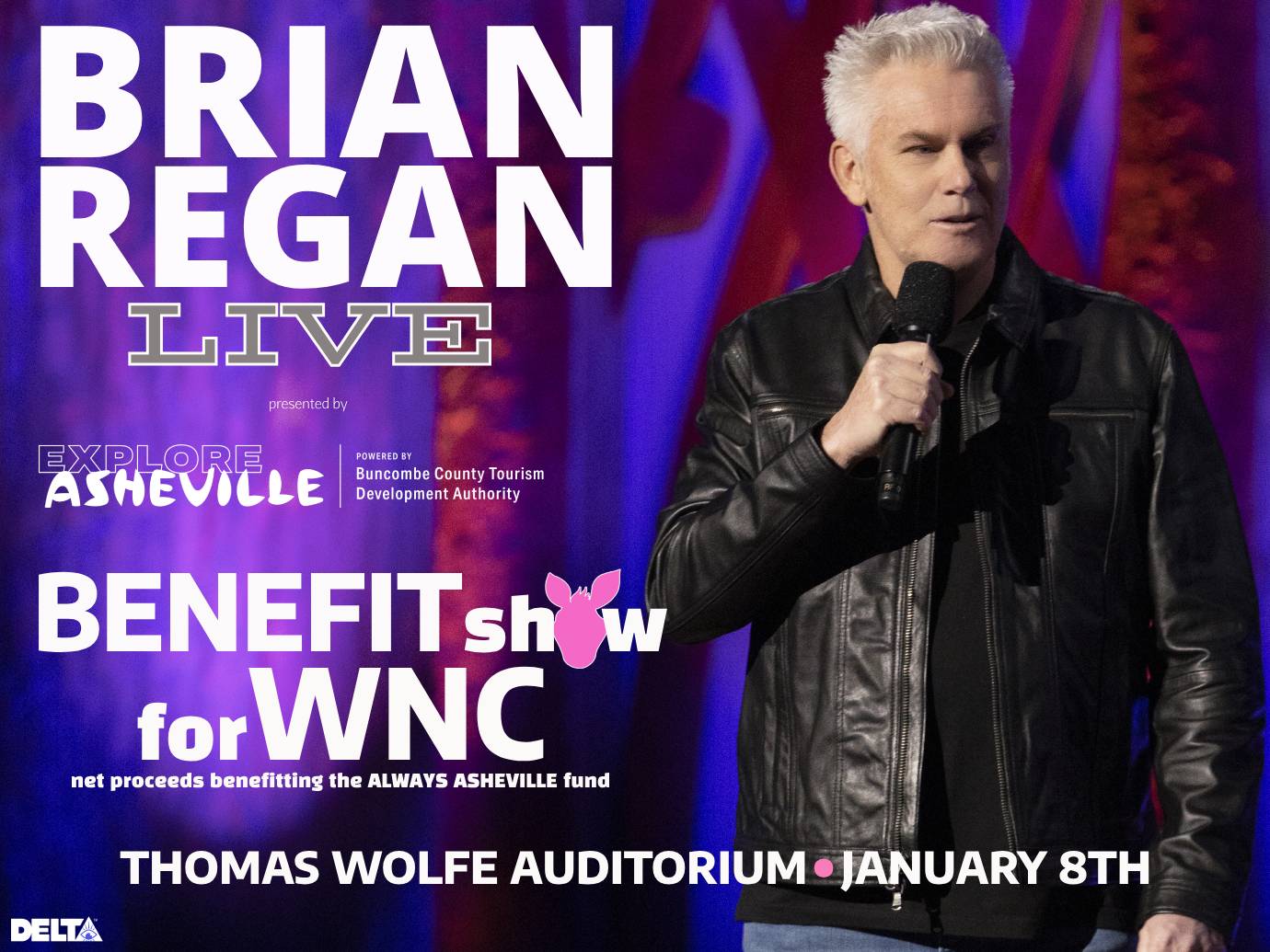
Critics, fans and fellow comedians agree: Brian Regan is one of the most respected comedians in the country with Vanity Fair calling Brian, “The funniest stand-up alive,” and Entertainment Weekly calling him, “Your favorite comedian’s favorite comedian.” Having built his 30-plus year career on the strength of his material alone, Brian’s non-stop theater tour continuously fills the most beautiful venues across North America, visiting close to 100 cities each year.
Jay Leno and Arsenio Hall, two legends of late-night television, bring their unparalleled charisma and humor to the stage. Jay Leno, renowned for his two-decade reign as the host of “The Tonight Show with Jay Leno,” continues to captivate audiences with his CNBC primetime series “Jay Leno’s Garage.” This show, now in its seventh season, delves into the fascinating world of cars, intertwining automotive passion with compelling human stories. Leno’s extensive career also includes hosting the comedy game show “You Bet Your Life,” performing over 100 stand-up shows annually, and authoring best-selling children’s books.